• Skip to main content
  • Skip to primary sidebar

Dr. Steven Davis

Davis Cosmetic Plastic Surgery

  • Home
  • About
    • Meet Dr. Davis
    • What Our Patients Say
    • FAQ
  • Procedures
    • Face Procedures
    • Breast Procedures
    • Body Procedures
    • HALO
    • Coolsculpting
    • Skin Procedures
    • Male Procedures
  • From Dr. Davis
    • Articles
    • Podcasts
      • The Plastic Surgery Revolution
      • Dr. Davis Video Series
    • Media
      • Dr. Davis Video Series
      • In The Media
      • Television Appearances
      • Dr. Davis on the Radio
      • Davis CPS In The News
      • Print Articles / Publications
  • Photos
  • Shop
  • Contact
    • Cherry Hill, NJ Location
    • Northfield, NJ Location
    • Philadephia, PA Location
  • 856-424-1700

Davis

Brazilian Butt Lifts & More

March 15, 2019 by Davis

If you’re looking for information on Brazilian butt lifts as well as other butt lift procedures, this is the video for you.

Board Certified Plastic Surgeon, Dr. Steven L. Davis of Davis Cosmetics in Cherry Hill, New Jersey, discusses the process that goes into butt lifts and how they differ. The Brazilian butt lift is one of the most popular cosmetic procedures in the world – learn why.

Thank you for watching Dr. Steven Davis from Davis Cosmetic Plastic Surgery on the process behind Brazilian butt lifts.  If you want more content in audio format, please check out The Plastic Surgery Revolution.
Filed Under: Dr. Davis Videos

What Kind of Anesthesia Will Be Used for My Plastic Surgery?

March 14, 2019 by Davis

The part that tends to unnerve most people about surgery is the anesthesia.

If you do some research beforehand and aren’t shy about asking your surgeon about any pressing concerns, you’ll have a pretty solid idea of what the surgery will entail, potential complications that may arise, and what the recovery’s going to be like. But the anesthesia can be a bit more difficult to understand because everyone responds a little differently to it.

Let’s dive into local vs. general anesthesia and the major differences between them. The upside to that is that the anesthesia can be tailored to the patient. So, just as plastic surgery is safer than it’s ever been, anesthesia is, too.

Local vs. general anesthesia

There are two basic kinds of anesthesia, local and general. Local, which is injected, numbs only the area that’s being treated. If you’ve had a dental procedure, chances are a local anesthesia, probably lidocaine, was used. By contrast, you’re completely unconscious under general anesthesia, which can be administered by inhalation or through an IV, though the latter is much more widespread today.

People like to equate being under general anesthesia to being in a deep sleep, but it’s more than that. It’s temporarily disabling the brain’s response to pain signals. When you awake from it, you won’t have any memory of the procedure. But, because you’ve been unconscious and unable to feel or react to anything for anywhere from an hour to several hours, you’re likely going to be dealing with delayed pain and discomfort as the drugs withdrawal from your system.

That can range from hangover-like symptoms—nausea, vomiting, and a headache—to breathing and blood pressure issues, all of which tend to resolve on their own between a few hours and a few days after the surgery. It can even lead to minor illnesses, like a cold or flu because your immune system was suppressed.

Which is to say that recovering from general anesthesia is fairly serious. You won’t be permitted to drive within at least 24 hours of your procedure. Combined with the residual discomfort from your surgery, you probably won’t be up for it anyway, or much of anything else, for the first couple of days.

With local anesthesia, there’s no recovery. In fact, you can drive yourself home after the procedure.

Ask your surgeon

Local anesthesia is frequently used with facial injectables, but it’s becoming much more common among surgical cosmetic procedures, too, even intensive procedures, like tummy tucks, breast augmentations, and rhinoplasty.

There are also instances when lighter variations of general anesthesia can be administered with the intent of minimizing, and even eliminating, the time the patient spends unconscious. It’s what’s referred to as twilight anesthesia. Essentially, you’ll become very relaxed and groggy, but you’ll never lose consciousness. Because it’s still considered general anesthesia, you’ll need someone to drive you home, though.

Here’s your takeaway about local vs. general anesthesia: Ask your plastic surgeon about your options. Just because a procedure’s traditionally been performed under general anesthesia doesn’t necessarily mean you don’t have any choice in the matter. And even if they recommend general anesthesia, kick-start a new conversation about what exactly it’ll entail. The more open the dialogue, the more closely your anesthesia can be tailored to your needs.

Filed Under: Articles

Skin Care with Angela Cyrus-Fowler

March 13, 2019 by Davis

On this week’s special episode of “The Plastic Surgery Revolution,” host Dr. Steven Davis sits down with senior medical esthetician Angela Cyrus-Fowler of Davis Cosmetic Plastic Surgery to discuss a variety of skin care topics.

They talk about personalizing and improving skin-care, radio-frequency facials and more. Tune in!

If you have any questions about skin care or wish to speak with Dr. Steven Davis, please contact us and schedule a consultation.

More Podcasts From Dr. Davis

[display-posts category_id=”10″ posts_per_page=”5″]

Filed Under: Podcasts

What’s a Nonsurgical Facelift?

March 12, 2019 by Davis

Over 15.7 million minimally invasive – or nonsurgical, cosmetic procedures were performed in the United States in 2017, according to the American Society of Plastic Surgeons. That’s up 186 percent from 2000. It’s also almost nine times more than the number of surgical cosmetic procedures that were done in 2017.

That data is telling in a number of ways. Perhaps most significantly, more and more people are gravitating to minimally invasive procedures, like a nonsurgical facelift, as they become more effective.

A nonsurgical facelift is actually a combination of treatments that are designed to shave years off your appearance, similar to a surgical facelift. But unlike the surgical facelift, you’re in and out of the surgeon’s office relatively quickly, you’ll experience little discomfort afterward, and the downtime, in turn, will be almost nonexistent.

Nonsurgical facelifts also come at a fraction of the cost of the surgical facelifts, but they may need touch ups every few months to maintain optimal results, which makes it a good way to test the waters, so to speak, if you’ve ever found yourself curious about a surgical facelift, but you’re anxious about its permanence.

Your goals tailor the treatment

A nonsurgical facelift is tailored to your goals, but it generally includes some combination of the following treatments:

  • Dermal fillers – to restore volume along the cheeks, temples, lips, and under the eyes;
  • Wrinkle relaxers – like Botox, to smooth forehead creases, frown lines, and crow’s feet;
  • Fat injections – using cleaned and processed fatty tissue extracted through liposuction, to enhance facial volume;
  • Chemical peels or laser resurfacing – to refresh dull or damaged skin; and
  • Radiofrequency treatments – like Forma and Fractora, to increase your skin’s natural collagen production.

Dermal fillers, such as Juvederm, Restylane and Volbella usually last up to a full year, while Voluma will last for closer to two years. Botox will last usually from four to six months, fat injections will last for years, and the benefits of chemical peels, laser resurfacing, such as Halo, TRL and CO2, and radiofrequency treatments will become more apparent over the months after your nonsurgical facelift.

While the treatments may need a touch up from time to time, it’s worth noting that the more diligent you are, the less you may need over time.

Who’s a good candidate?

The nonsurgical facelift can slow the aging process, but it yields the best results when your skin is still elastic and your wrinkles aren’t very pronounced. In other words, your face shows only mild to moderate signs of aging.

Still, the results aren’t going to be as permanent as a surgical facelift. So, setting realistic expectations is important. Think of the nonsurgical facelift more as a subtle, natural recontouring of the face. You will be able to appreciate the results much sooner, though, than you would with a surgical facelift. The dermal fillers take effect instantly, and Botox begin taking effect within a few days and won’t require any downtime.

Chemical peels, laser resurfacing, and radiofrequency treatments may require a few days or weeks of recovery time, depending on the extent of your procedures—talk to your surgeon or medical aesthethician. Like I said, the nonsurgical facelift is tailored to your goals, and minimizing downtime certainly counts as one.

Filed Under: Articles

In Office: Flash Liposuction

March 8, 2019 by Davis

On our new “In Office” series, Dr. Steven Davis of Davis Cosmetic Plastic Surgery in Cherry Hill, NJ takes us behind the scenes of a popular procedure done in the office.

Developed by Dr. Davis, Flash liposuction (Fat Lipo Away, Same Hour) is an advanced procedure to quickly break down and remove fat permanently.

As said by Dr. Steven Davis, “I came up with a system that allows me to take very fine straws and literally aspirate, or suck out the fat from that zone.”

If you would like more information on this innovative procedure developed by Dr. Steven Davis, click here.

Thank you for watching Dr. Steven Davis from Davis Cosmetic Plastic Surgery.  If you want more content in audio format, please check out The Plastic Surgery Revolution.

Filed Under: Dr. Davis Videos

My HALO Fractional Laser Treatment Experience

March 7, 2019 by Davis

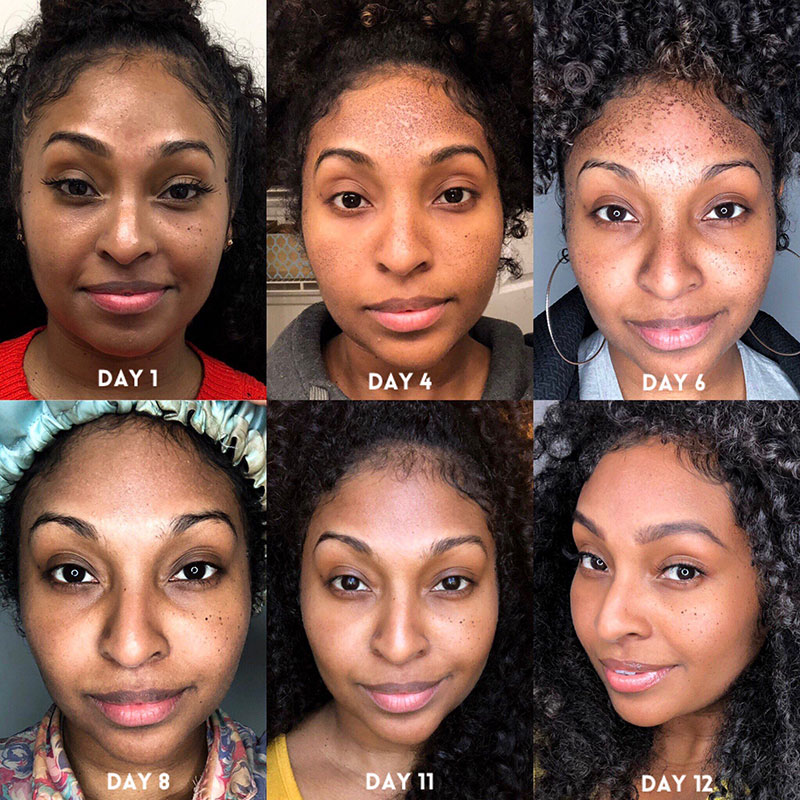
From our client regarding her latest Halo Fractional Laser treatment.

“I recently got a skin treatment called the Halo Fractional Laser treatment. Those of you that watch my IG stories already know because I’ve been sharing my experience as far back as my first consultation with Dr. Steven Davis form my favorite Cherry Hill Cosmetic Plastic Surgery Davis Cosmetic Plastic Surgery.”


View this post on Instagram


A post shared by Brandi Harrell (@brandirell) on Feb 17, 2019 at 3:40pm PST

“So I won’t get into all of the medical details but the “Halo treatment” is laser treatment that addresses the tone and texture of the skin. Ends results should give you a glow you can’t buy on the shelves! Right now I’m in the “MENDS” phase. Mends are microscopic wounds that contain large amounts of melanin. This is part of the healing process where the treated skin is working it’s way out of the body as new fresh skin is regenerated.”

“The “mends” have completely taken over my face and I had one of two options. Cover it up with mineral based makeup only! Or, hide in my house and not show my face until the mends were completely gone. I am not hiding and I’m not buying a mineral base makeup because I honestly just want my skin to breathe during this process. So I’ve chosen to embrace the “mends” as the freckles that I’ve always wanted.

Life is all about perspective and you can find beauty in anything if you choose to. I just wanted to fill everyone in on what’s goin on with my face when you see me and my mends pop up on Instagram.”

“My skin is about to be on another level! Thank you Dr. Davis.”

Watch Brandi’s Progress

Filed Under: Articles

How Do I Prepare for Plastic Surgery?

March 7, 2019 by Davis

In at least one respect, plastic surgery’s like any other endeavor in life: The more you prepare for it, the better it’ll go. So, once your surgery’s scheduled, here’s a timeline to help you do just that.

Two weeks before surgery

Two weeks out, read up on your procedure. You probably did a lot of Googling ahead of your initial consultation, and that’s great, but don’t stop there. The premise is pretty simple here: The more you know about something, the less intimidating it becomes.

Don’t worry about trying to understand the medical jargon. Instead, look for descriptions of the surgery and the recovery so that you can start to form expectations for each. Read former patient reviews, and ask your surgeon if they can put you in touch with some former patients. Try to answer questions like these:

  • Bruising and swelling are natural, but how long will they last?
  • How intense will the discomfort be following the surgery?
  • What’s involved in dressing your incisions?
  • How long until you’re back to your normal lifestyle?

Those questions are bound to lead to others. Don’t be shy about asking your surgeon. It’s in their best interest to help you feel as comfortable as they can going into your surgery. In the same vein, don’t hesitate to share any concerns, either. You may feel like you’re overreacting, but, remember, your surgeon’s done this procedure hundreds, if not thousands, of times. Which means they’ve likely heard your concerns before.

You’ll also want to begin getting both your home and body in order. Coming back to a clean home is one less stressor. But it’s also a smart move because your mobility’s going to be very limited for at least the first couple of days. So, stock up on food and any necessary supplies, including any pain medications prescribed by your surgeon.

If you drink or smoke, abstain until you’re through your recovery. Both can significantly hinder the healing process. Your surgeon may also recommend that you stop taking certain supplements and medications, including aspirin and ibuprofen.

24 hours before surgery

If your procedure includes IV sedation or general anesthesia, the hospital will instruct you to not eat or drink anything after midnight.  If you have prescribed medications you take every day, you can take them with a small sip of water the morning of your surgery.

Also, someone will need to drive you to and from the hospital and, ideally, to look after you for the first day or two after the surgery. You’re mostly going to want to sleep, but you may need some help getting to and from the bathroom and making something to eat.

After your surgery

After the surgery is where your preparation’s going to play its most critical role. When you’re able to prepare yourself for pain and discomfort, you’ll usually find that they’re less than what you expected.

The same goes for your appearance immediately following the procedure. That preparation’s going to help you avoid being judgmental. Before your surgery, you’ll probably scroll through hundreds of before-and-after photos. But they only tell part of the story. You don’t see the bruising and swelling that took place in between.

That’s why, if you have the opportunity, you should talk to other patients who’ve gone through your procedure. They’ll be able to give you a more specific depiction of the recovery. Knowing what to expect will enable you to be easier on yourself. You’ll understand that it’s only temporary, and as long as you take the time to heal, you’ll be back to your normal self, or even better, before long.

Filed Under: Articles

Let’s Talk Facelifts

March 6, 2019 by Davis

More often nowadays, we hear patients tell Dr. Davis, “Please don’t make me look this…”

Due to many celebrities deciding to take plastic surgery to extreme levels, patients are concerned that these are typical results.

At Davis CPS, Dr. Steven Davis performs facelifts to enhance your look; NOT to make you look different.

If you have any questions about facelifts or wish to speak with Dr. Davis, please contact us and schedule a consultation.

More Podcasts From Dr. Davis

[display-posts category_id=”10″ posts_per_page=”5″]

Filed Under: Podcasts

  • « Go to Previous Page
  • Page 1
  • Interim pages omitted …
  • Page 59
  • Page 60
  • Page 61
  • Page 62
  • Page 63
  • Interim pages omitted …
  • Page 84
  • Go to Next Page »

Primary Sidebar

About Dr. Steven L. Davis

Dr. Steven L. Davis is Board Certified in Cosmetic Plastic Surgery, a Fellow in both The American College of Osteopathic Physicians and Surgeons and the American Academy of Cosmetic Surgery.

Schedule Consult

Our Locations

Cherry Hill
1916 Marlton Pike East
Cherry Hill, NJ 08003
856.424.1700

Philadelphia
1546 Packer Ave.
Philadelphia, PA 19145
215-334-9900

Northfield
2306 New Rd (Rt. 9)
Northfield, NJ 08225
609-653-0500

© 2025 · Davis Cosmetic Plastic Surgery • Privacy Policy • New Jersey Web Design by Trinity Web Media